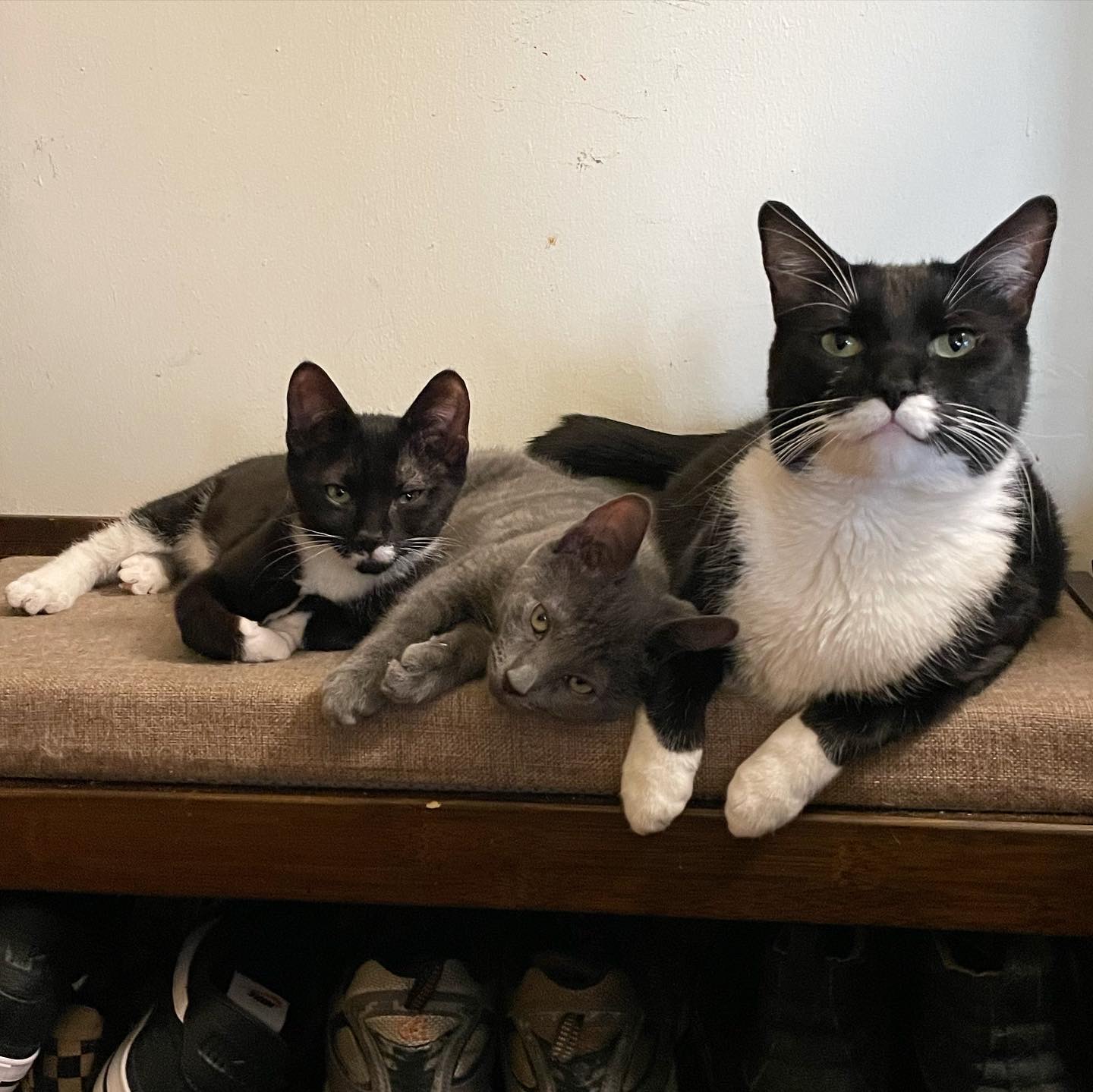
Socializing cats and kittens
I’ve been fostering cats and kittens for five years. I love friendly cats and kittens, but I have a special love for socializing cats and kittens.
Age & Shyness
In general kittens 8 weeks and under can be socialized rather quickly. Kittens under 3 months will usually open up sooner than older kittens and cats. Since they need to eat more often you’re interacting more and they’re more curious about toys. A lot of the steps I use below can take place in a shorter amount of time with kittens.
The older a kitty is without having had any real human interaction, the longer it may take them to be comfortable around humans. If cats have had some positive interactions with humans that also helps speed up socialization.

Patience
Patience is important when working with shy, undersocialized or feral kitties. Every cat is different and some cats need more time. I try not to have any expectations when I first start working with a cat and meet them where they are. I get to know them and what they like and I think that helps us build a better bond.
Set-up
It’s really important to be able to be near a cat during socialization. If you use a room with lots of places to hide, it’ll be harder for you to interact with them which can extend the time it takes for a cat to be socialized.
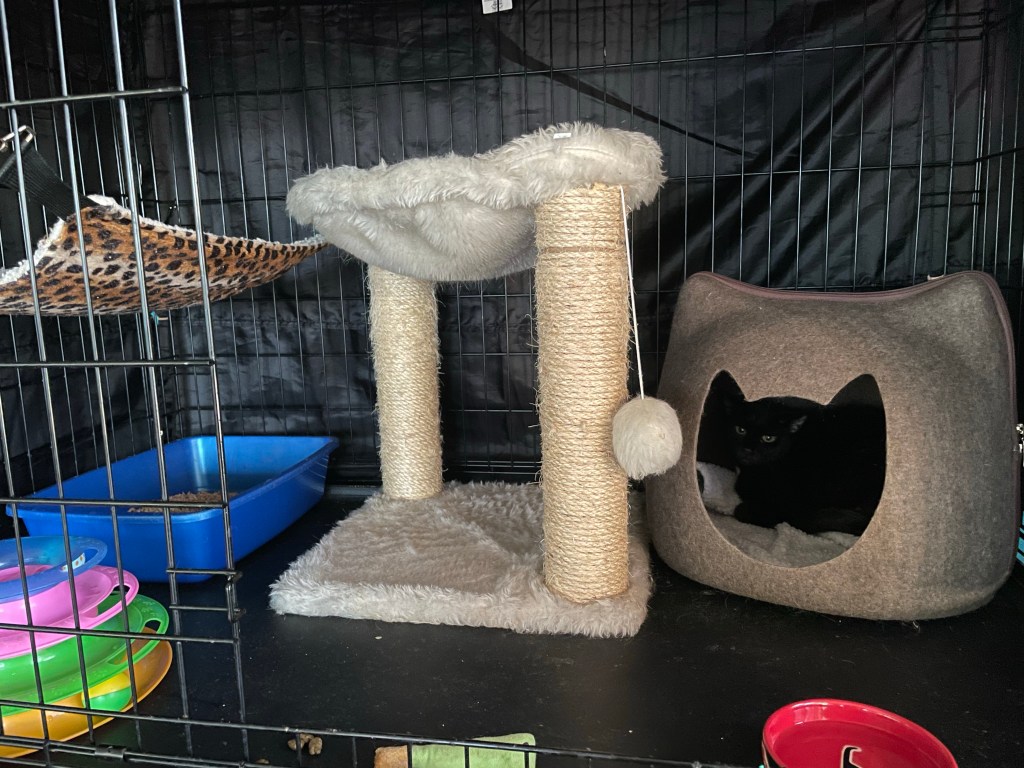
I use dog crates as they are easy to clean and I put mine on a high table so I’m not towering over them.
You can also use collapsible canvas pens or plastic pens. I find setting up the crate in the living room where the cat can be exposed to daily routines and sounds is ideal.
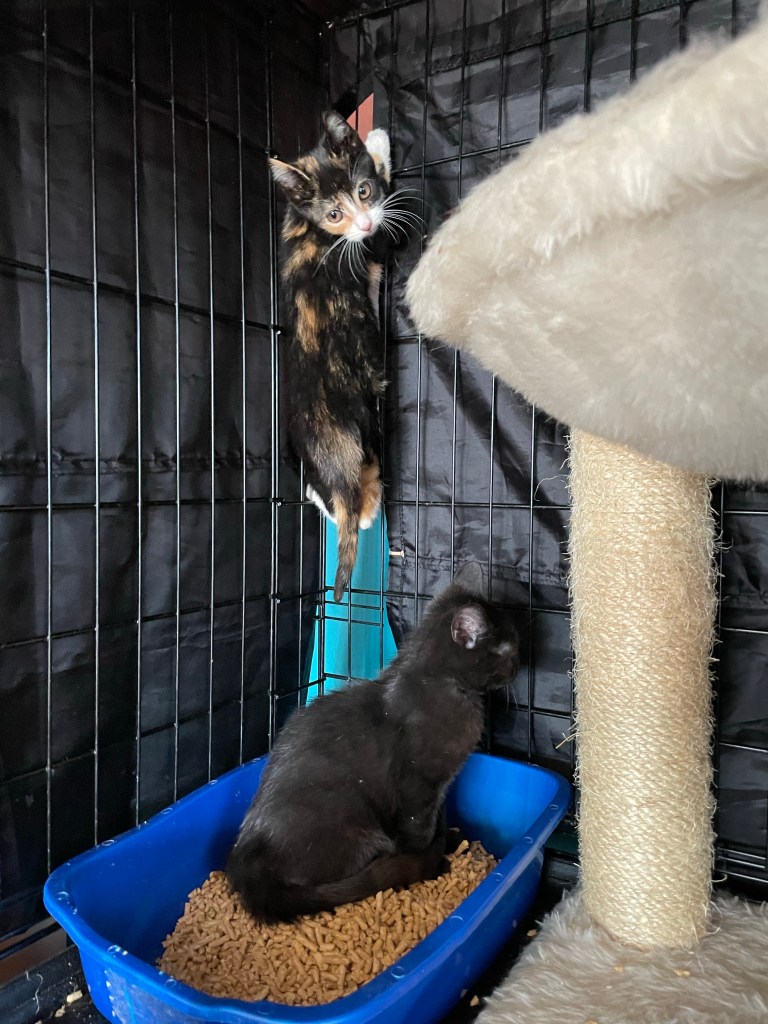
I make sure kitties have a cubby to hide in, along with the essentials like litter box, food/water bowls and if they fit, a scratcher and some toys.




Day 1
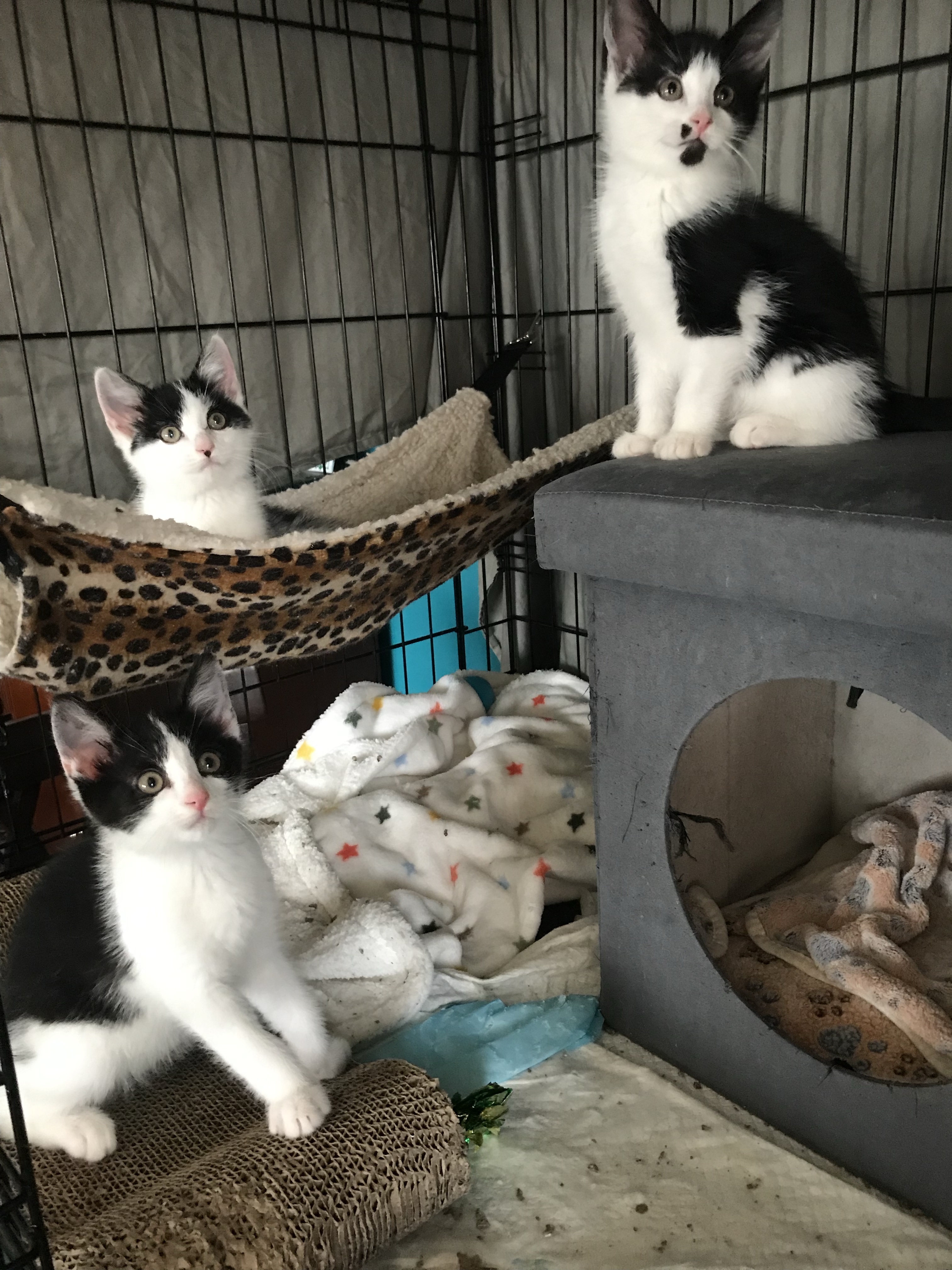
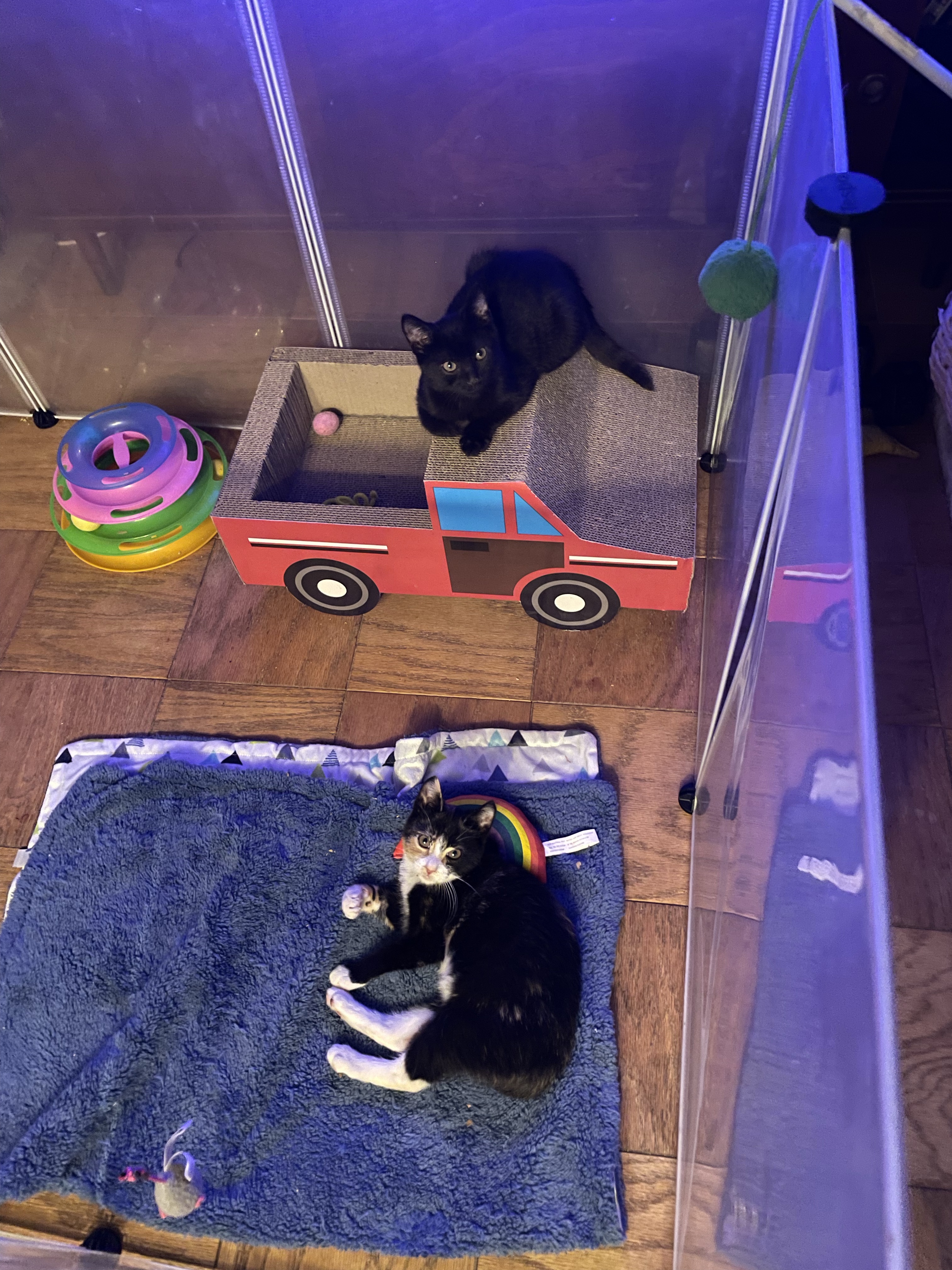
When they first arrive, I usually will put kitties in their new area and cover it up with a cotton breathable blanket and leave them alone to adjust.
The first day or so can be scary and unfamiliar so they might not eat a lot. I will talk softly while I clean their crate and feed them. I want them to get used to the idea that I’m there to care for them.

Week 1
I make sure to spend several times a day with them for brief periods. I read near them, talk softly, put on music/tv. I’ll slow blink and sit or stand sideways rather than face forward which can be imposing. If I see that I’m making them uncomfortable I’ll leave. If they eat while I’m near them then that shows me they’re starting to feel comfortable around me.
I like to build a routine of when I clean, when I bring food or fresh water and treats. I think that helps them get used to me a little quicker.
Week 2 and Beyond
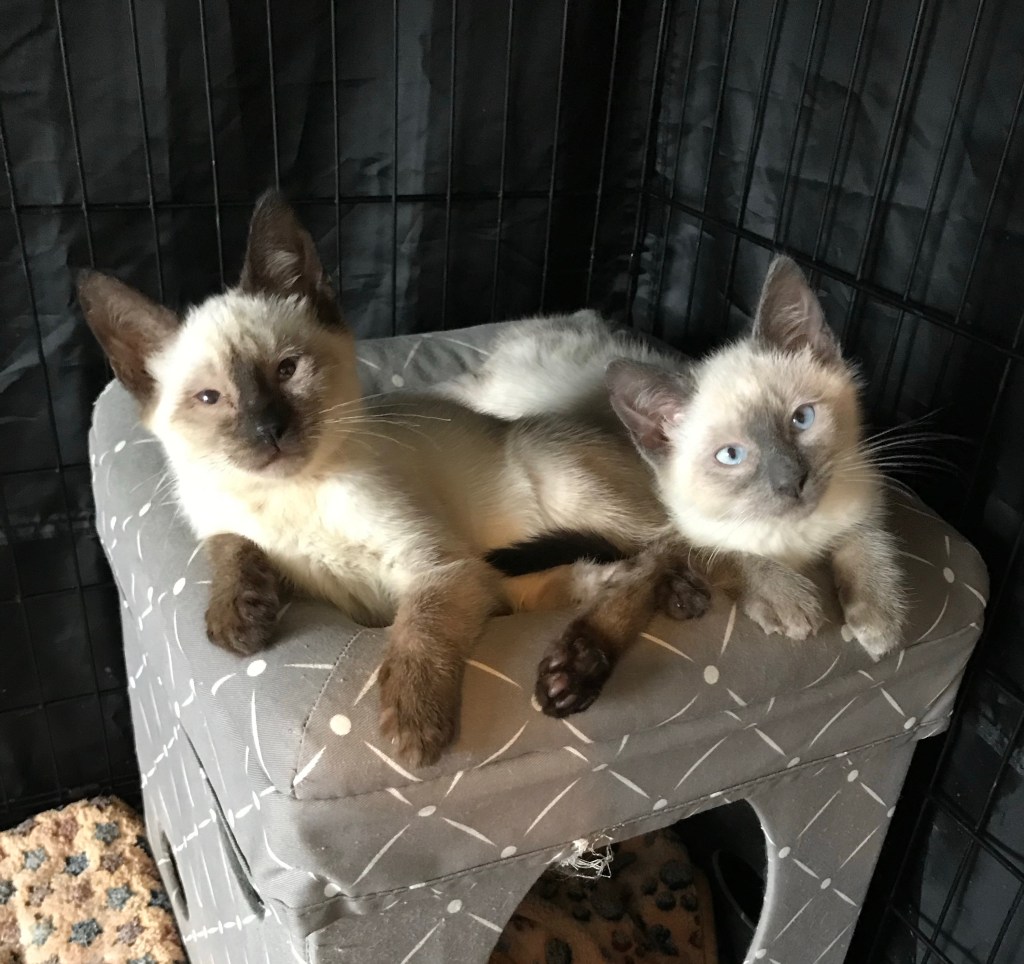
Sometimes by the second week you might find that the kitty likes a particular toy or is feeling comfortable to eat in front of you. I usually use a wand to pet them while eating or when they’re napping to get used to some touch. I slowly start using my hand if I see that they’re enjoying the wand. I never reach towards a cat and Instead pet them from behind or let them approach my hand.
Every cat is different. Some really respond to treats – like lickable tubes, baby food on a long spoon, crunchy treats or freeze dried treats.
Some cats might not respond to treats but might be curious about wand toys or a laser pointer.
Whether it’s treats or play or both, the kitty will start associating you with these positive moments.
Once I start seeing the kitty approach me and show more curiosity, I might move them to a bigger space and see how they do there, and Introduce them to a friendly social cat. If they can see me petting my cats who is enjoying it, I think they see that I’m not a threat.
I continue giving the kitty treats near me, in between my legs, from my hands. If they’re interested in playing we have daily play sessions. Whatever they like.
After I’m able to pet the kitty, I try to see how they feel about being held. I start with touching under their belly when they’re standing and if they’re comfortable with that I try picking them up, first for a few seconds and then longer each time. Not every cat will let you pick them up. They may one day in their home, but every cat is different.

 Adoptables NYC